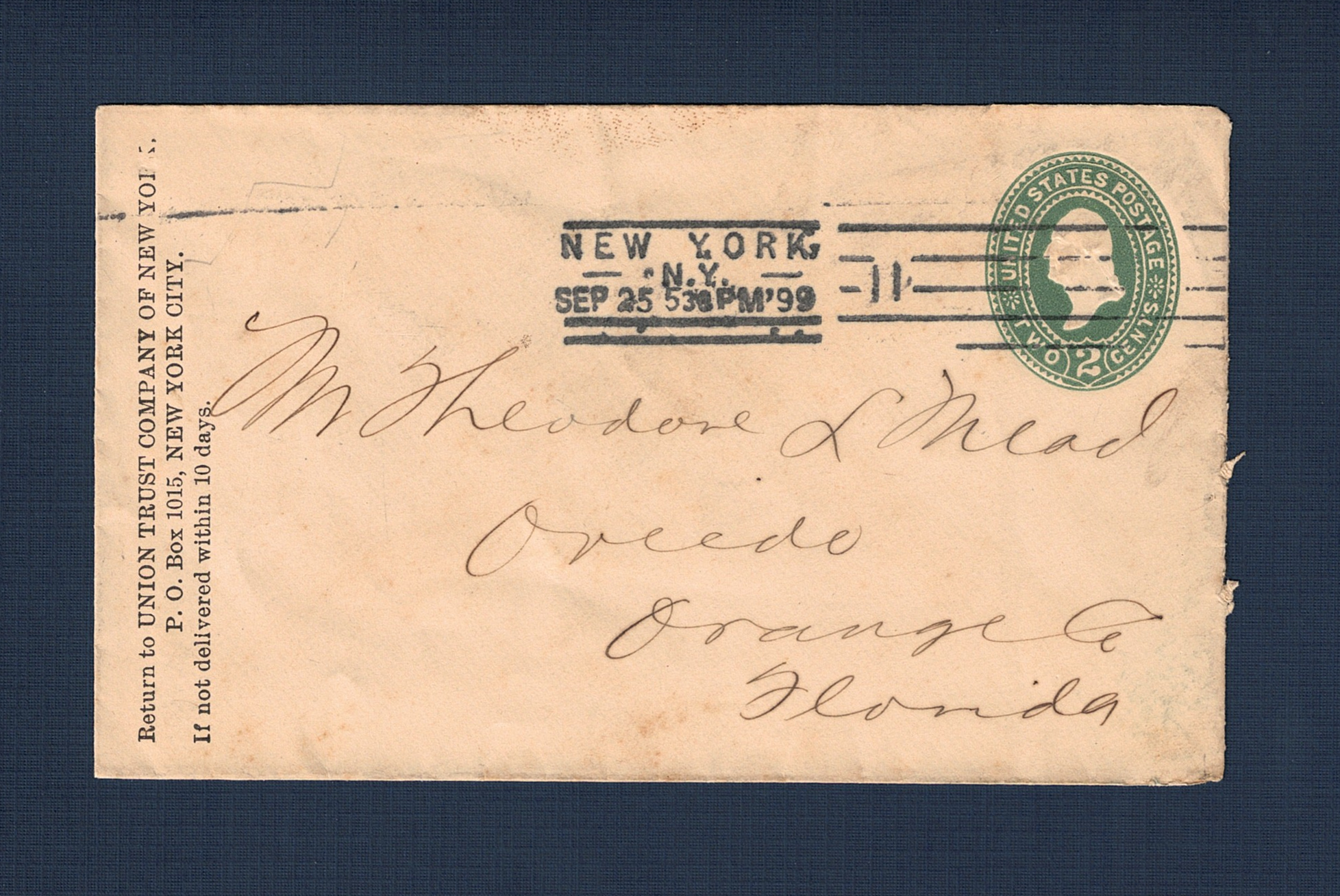
This 1899 commercial cover was sent from New York City to Theodore L. Mead in Oviedo, Florida, on September 25. The envelope features a green two-cent George Washington stamp and a sophisticated rectangular machine cancel from the New York post office, reflecting the more advanced postal technology used in major metropolitan hubs compared to rural stations. It was sent by the Union Trust Company of New York, a major financial institution of the Gilded Age, likely concerning Mead's personal investments or the management of his estate.
The reverse of the envelope is particularly unique, as it contains several lines of Mead’s own pencil notations. These notes appear to be horticultural records related to his botanical experiments, specifically mentioning various orchid species such as Cattleya bowringiana and C. zenobia, along with dates ranging from 1899 to 1902. This repurposing of business mail as scrap paper for scientific observations highlights Mead’s diligent nature and provides a glimpse into the ongoing work that made his Oviedo garden a site of international botanical importance.
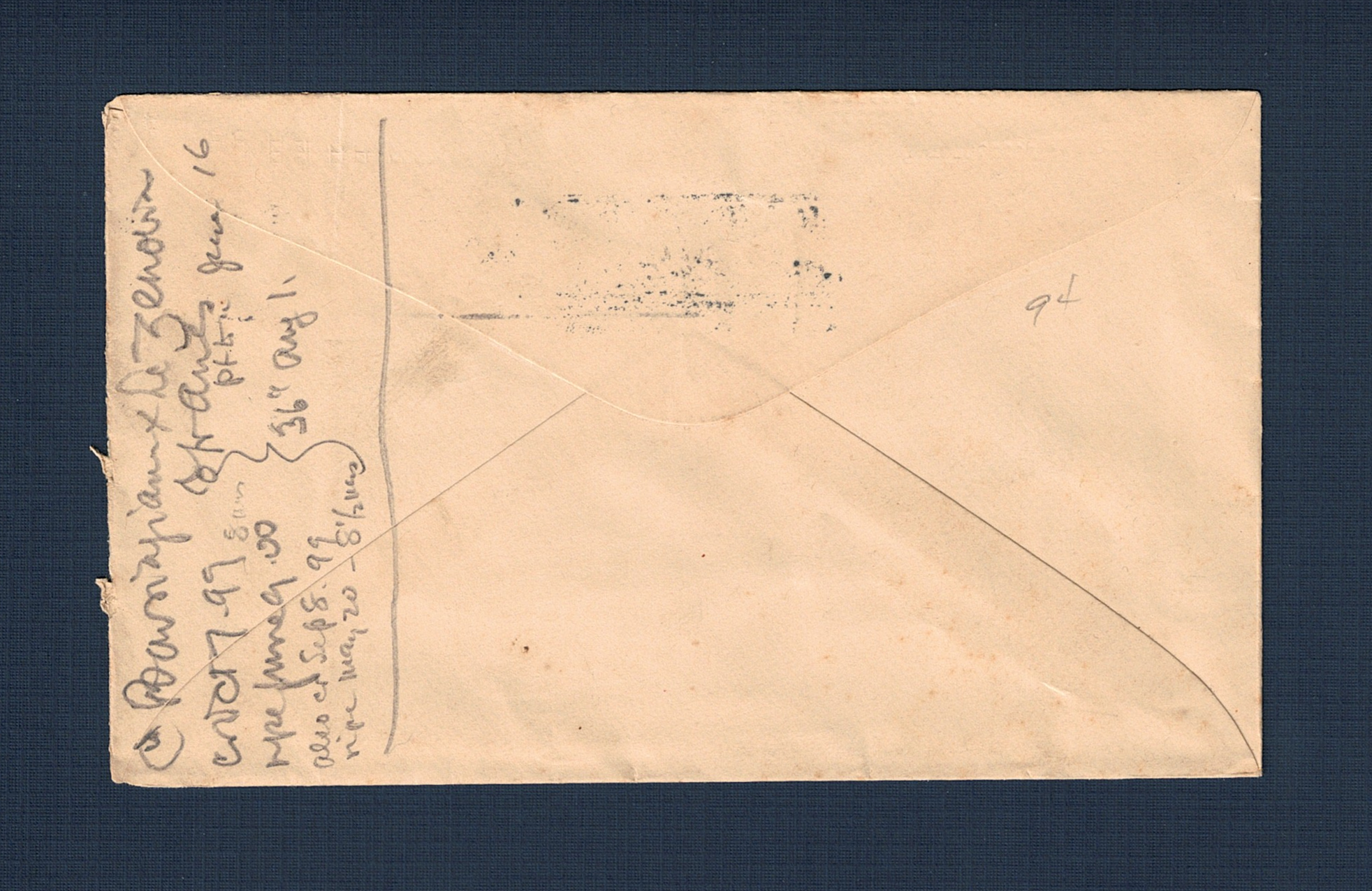
The handwritten notations on the reverse of this 1890s envelope appear to be horticultural records and bloom dates for various orchids in Theodore Mead's collection, transcribed as: C. Bowringiana x L. Zenobia, entered 97 - 8 am, mpe June 9-00, also ct Sep 8, 99, ripe May 20 - 8 1/2 am, plants June 16, 36" Aug 1, 94.